




Balanced Investing in an Era of Market Hype
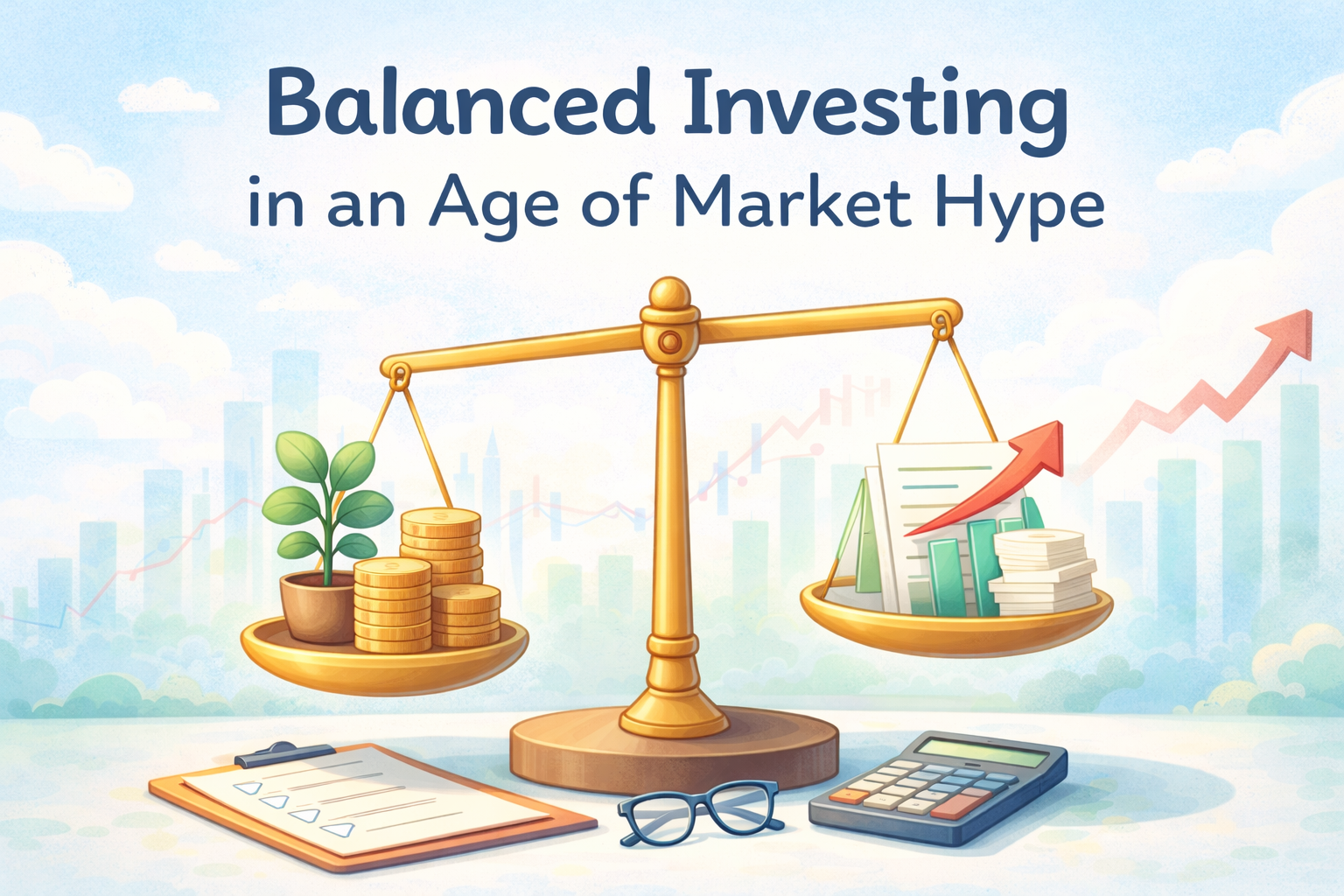
Investing has never been more accessible. With a few taps on a phone, anyone can build a heavily concentrated stock portfolio. Platforms like Robinhood have made all-equity investing feel simple yet exciting. Social media amplifies that excitement, highlighting the outsized gains of a few high-profile companies like the “Magnificent Seven” and reinforcing the idea that concentrated stock exposure is the fastest path to success. During strong markets, it can seem like the obvious choice.
But investing has always involved a tradeoff.
Stocks offer growth. They represent ownership in companies and the potential for meaningful long-term appreciation. Over time, equities have historically rewarded patient investors. The tradeoff is volatility. Markets rise, but they also fall, often quickly and unpredictably.
Bonds play a different role. They are not designed to generate the same long-term returns as stocks. Instead, they provide income and stability. When markets become unsettled, bonds have helped cushion portfolios and reduce overall swings. They may not feel exciting, but they serve an important purpose.
A balanced portfolio does not mean a rigid 50/50 split. It means thoughtfully blending growth and stability based on time horizon, goals, and comfort with risk. A younger investor may lean more heavily into equities, while someone approaching retirement may prioritize preservation. The objective is not eliminating risk. It’s managing it.
History consistently shows that diversified portfolios tend to experience smoother outcomes than all-equity approaches. While stock-heavy portfolios surge during bull markets, they also test discipline during downturns. For example, during a year when stocks decline 20%, a portfolio allocated 70% to stocks and 30% to bonds might decline closer to 12–15%, depending on bond performance. That difference can make it significantly easier to stay invested.
That behavioral advantage matters. A portfolio that swings dramatically can create stress and invite reactive decisions. A balanced approach helps investors remain steady, even when headlines are not.
Equities remain essential for long-term growth. But growth without stability introduces unnecessary strain. By combining stocks and bonds, investors can pursue opportunity while protecting progress. In an era where excitement often grabs attention, balance remains one of the most reliable tools for building lasting financial confidence.