




Getting Ahead of Taxes by Understanding Your Accounts
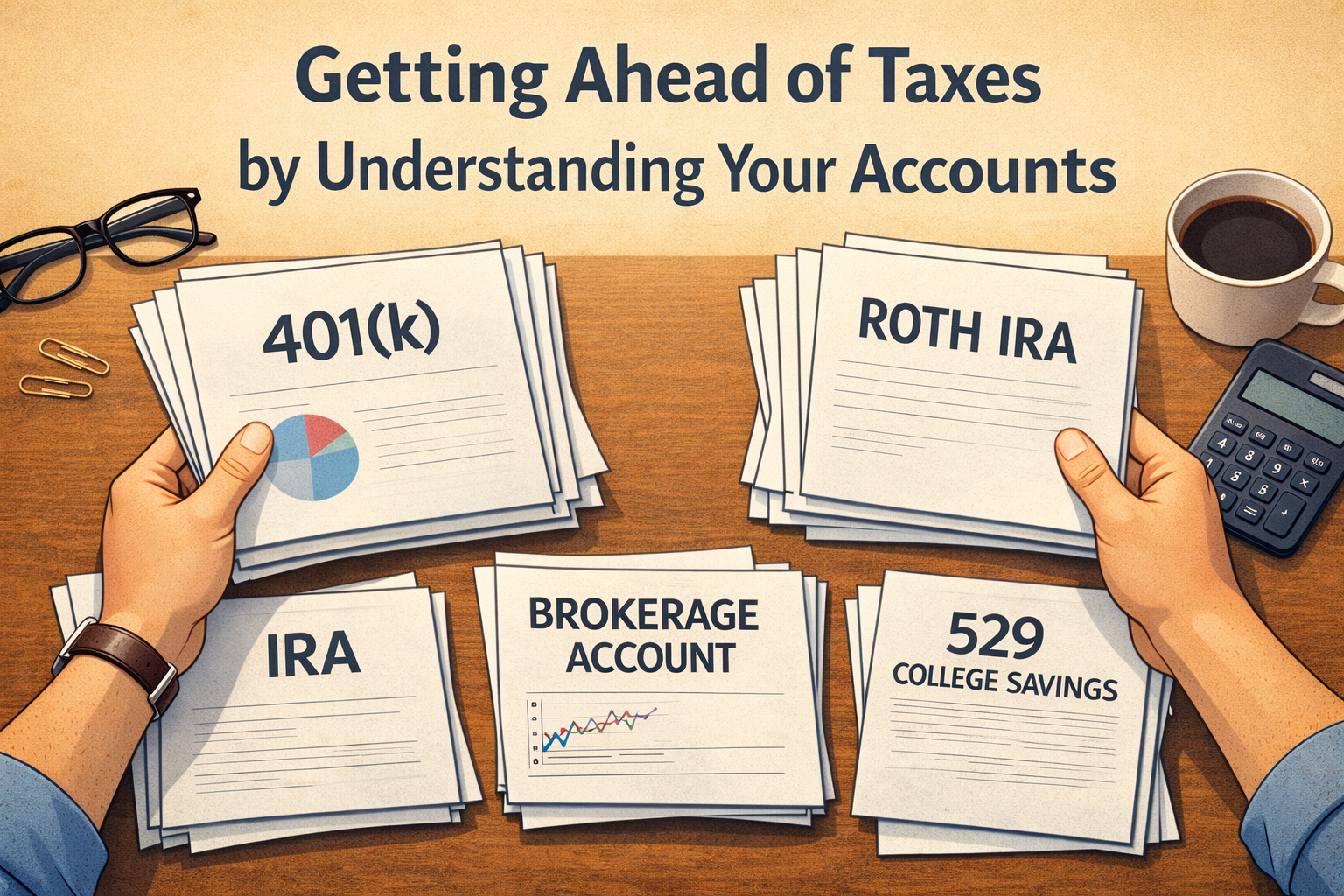
When it comes to investing, understanding which accounts to use, when to use them, and how they are taxed can feel overwhelming. However, these choices have a meaningful impact on long term financial planning. The type of account holding your money often matters just as much as the investments inside it. When used strategically, different account types can work together, improving flexibility, reduce friction and support long term goals.
Most of these accounts fall into two categories: qualified and unqualified. Each plays a distinct role, with different tax treatments and planning considerations that influence how effectively your money can work for you over time.
Qualified Accounts
These accounts receive special tax treatment in exchange for specific rules around contributions and withdrawals.
Traditional IRAs and 401ks: These are funded with pre-tax dollars, which reduce taxable income. Investments grow tax deferred, and taxes are paid when funds are withdrawn, usually in retirement. These accounts work best when future tax rates are expected to be lower.
Roth IRAs and Roth 401ks: Contributions are made after tax, but qualified withdrawals, including growth, are tax free. Roth accounts can be especially useful for younger savers or anyone seeking tax free income later in life.
Others: These serve more specific purposes. Health Savings Accounts allow tax-deductible contributions, grow tax free and can be withdrawn without tax for qualified medical expenses. 529 plans allow after tax contributions with tax free growth when used for education expenses. Both cases come with usage restrictions.
Nonqualified Accounts
Nonqualified accounts don’t offer the same tax benefits but provide greater flexibility and fewer limitations.
Individual taxable brokerage accounts: The big advantage here is no contribution limits or withdrawal rules. However, income and gains are generally taxable, either annually or when investments are sold. These accounts are commonly used for goals outside of retirement.
Trust accounts: Often used for estate planning and legacy goals. Their tax treatment can be complex, with income taxed at the trust level or passed through to beneficiaries, but they remain valuable planning tools.
Savings and money market: Interest is typically taxed as ordinary income, but these accounts play an important role in liquidity and short term planning.
Qualified accounts focus on long-term, tax-advantaged growth, while nonqualified accounts emphasize flexibility and access. Most effective financial plans use a mix of both. Being aware of how your accounts work and utilizing them well can take you one step closer to achieving financial wellbeing.